Tips for Protecting Furniture While It Is in Storage
Tips for Protecting Furniture While It Is in Storage
Placing furniture in a storage unit can free up valuable space during a move, renovation, or life transition. Before storing your furniture, take a few precautions to help prevent scratches, stains, moisture damage, and other problems.
Clean Everything First
Dust, dirt, and food residue can cause stains or attract pests over time. Before moving furniture into storage:
- Vacuum upholstered furniture.
- Wipe down wood, metal, glass, and plastic surfaces.
- Use an appropriate cleaner for each material.
- Allow every item to dry completely.
Storing furniture while it is damp may encourage mold, mildew, or unpleasant odors.
Disassemble Larger Pieces
When possible, take apart bed frames, tables, shelving units, and other large furniture. Disassembled pieces are easier to move and less likely to become damaged.
Keep screws, bolts, and other small hardware in labeled bags. Tape each bag securely to the corresponding piece or place all hardware in a clearly marked container. Take a few photos before disassembly to make reassembly easier.
Use the Right Covers
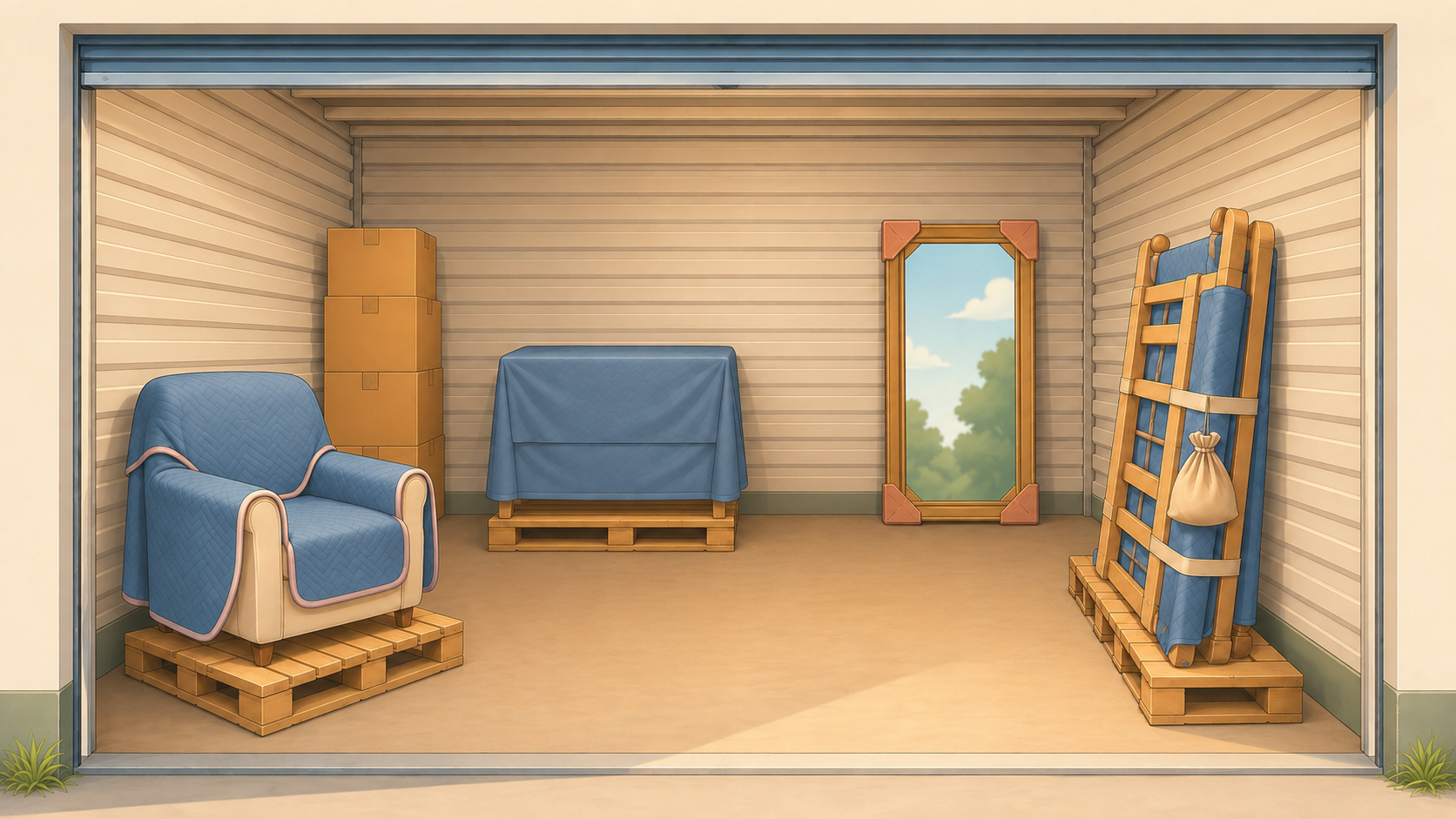
Cover furniture to protect it from dust, scratches, and minor impacts. Furniture blankets, moving pads, sheets, and breathable fabric covers are good options.
Avoid wrapping wood or upholstered furniture tightly in plastic for long periods. Plastic can trap moisture and create conditions for mold or mildew. If you use plastic during transportation, consider removing it or loosening it once the furniture is inside the unit.
Protect Fragile Surfaces
Use extra padding on glass tabletops, mirrors, corners, and decorative details. Wrap fragile pieces individually and clearly label them.
Store glass panels and mirrors upright in a protected location rather than laying them flat. Avoid placing heavy items on top of them.
Keep Furniture Off the Floor
Place furniture on pallets, shelving, or protective boards to create a barrier between your belongings and the floor. This can also improve airflow around the items.
Make sure everything is stable and level. Do not use supports that could shift or collapse under the furniture’s weight.
Arrange the Unit Carefully
Plan the layout before filling the storage unit. Place heavy, sturdy furniture toward the back and lighter or more fragile items on top or in protected areas.
Leave a small walkway so you can reach items without moving everything. Avoid stacking boxes or furniture too high, and never place heavy objects on upholstered pieces.
Consider Climate-Controlled Storage
Wood, leather, antiques, and upholstered furniture can be sensitive to temperature and humidity changes. A climate-controlled unit may offer additional protection, especially during long-term storage or in areas with extreme weather.
Ask the storage facility whether climate-controlled units are available and whether they are recommended for the type of furniture you plan to store.
Check Your Furniture Periodically
If your furniture will remain in storage for several months, visit the unit occasionally. Look for signs of moisture, pests, shifting covers, or unstable stacks. Addressing a small issue early can help prevent more significant damage.
With proper cleaning, covering, and organization, your furniture can remain protected and ready to use when you need it again.